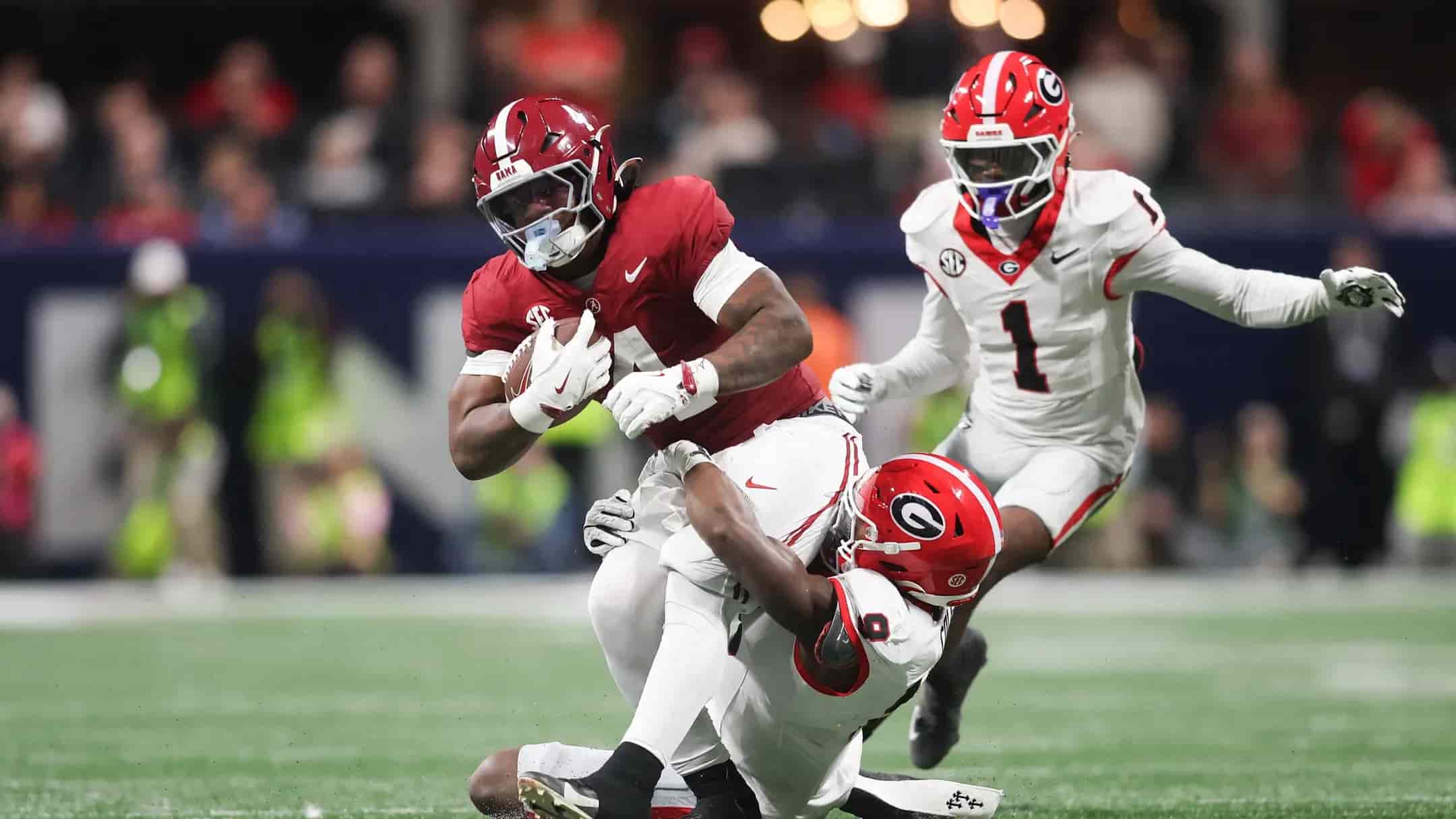
For nearly two decades, Bryant-Denny Stadium has been less of a football venue and more of a sanctuary for the inevitable. Since 2007, under the long shadow of the Nick Saban era, the Alabama Crimson Tide have existed as a monolith—a team that, when playing at home, was almost universally expected to win, and usually by a significant margin. But this week, for a few fleeting hours, the sports betting world offered a glimpse into a reality that many fans thought they would never see: Alabama as a home underdog.
The betting lines for the looming clash against Georgia opened with the Bulldogs favored by a narrow margin. It was a statistical anomaly so rare that it had occurred only once before in the last 17 years. When the news hit the betting boards, it sent a ripple of disbelief through the college football landscape. It was a rare, tangible marker of change—a signal that the era of Crimson Tide invincibility, at least in the eyes of Las Vegas oddsmakers, had finally softened.
The Psychology of the Line
To understand why this matters, you have to look at what a “spread” actually represents. It isn’t just a mathematical prediction of points; it is a pulse check on public confidence and institutional muscle. When Alabama is the favorite, it is an acknowledgment of a culture that has been meticulously built since 2007. When they become the underdog, it suggests that the gap between the giants of the SEC has either closed or, perhaps, shifted in favor of the visitors.
However, the status didn’t last. Almost as quickly as the “plus” sign appeared next to Alabama’s name on betting apps, the money flowed in, the algorithms recalibrated, and the Crimson Tide returned to their customary position as the favorite. That rapid reversal speaks volumes about the betting public’s deep-seated conditioning. Even in a new era for the program, the reflex to back Alabama at home remains a powerful force in the sports wagering ecosystem.
Why the Market Couldn’t Let Go
The swift movement back to Alabama being the favorite highlights a fundamental truth about college football betting: reputation is a stubborn asset. Oddsmakers aren’t just betting on rosters; they are betting on history. They know that when Alabama plays at home, the atmosphere, the coaching pedigree, and the sheer talent density usually find a way to overcome the deficit.
For the everyday fan, this brief tremor in the betting markets serves as a fascinating case study in how we value teams. We are living through a transitional period in college football where the old guard is being pressured by a new class of elite challengers. Georgia, now widely considered the gold standard, represents that new guard. Yet, even as they enter the conversation as the team to beat, the market remains terrified of counting out the Tide.
What This Means for the Game
Whether or not Alabama “should” have been an underdog is almost secondary to the psychological impact of the news. For a few hours, the invincibility cloak was lifted. For the players in the locker room, this kind of information is fuel. Coaches often downplay betting odds, but the reality is that players hear the noise. They know when they are being doubted, and there is no greater motivator for a proud program than the suggestion that their home-field advantage has finally expired.
As we approach kickoff, the focus shifts back to the grass and the pads. The numbers may have stabilized, but the perception has been altered. This brief shift in the betting lines proved that in the modern era, the gap between the elite is thinner than ever. The Crimson Tide may have reclaimed their status as favorites, but the fact that they were ever displaced at all proves that the landscape of college football is moving, evolving, and becoming more unpredictable with every snap.
For now, the order has been restored. But the next time the Crimson Tide lines open, keep a close eye on that “plus” sign. It might not be as rare of a sight as it used to be.
Optimize Your Training & Nutrition
Explore our interactive tools designed to fine-tune your performance and track your progress.
 Adam Hawk