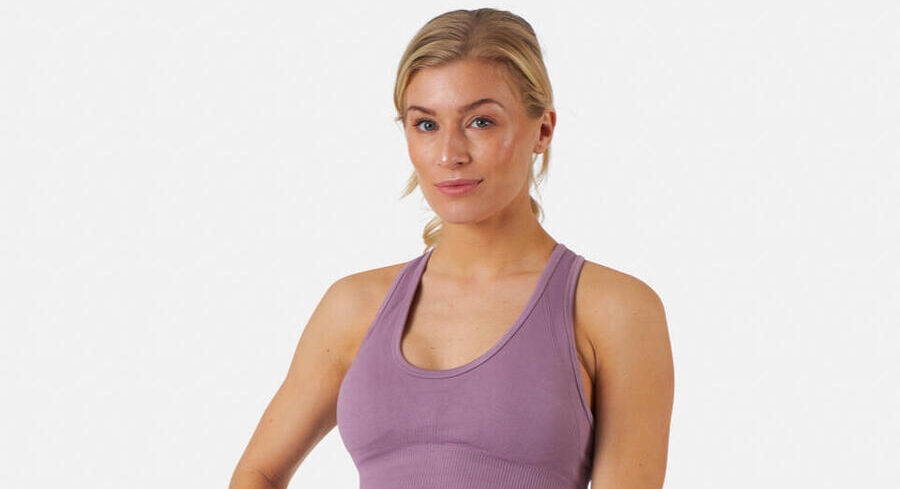
In the hyper-optimized world of professional cycling, the obsession with “marginal gains” has driven teams to dissect everything from the weave of a sock to the paint on a frame. But during the Tour de France Femmes, the search for aerodynamic advantages veered into unexpected territory: the sports bra. Rumors and quiet chatter began circulating in the peloton that padded sports bras were being used not for support, but as makeshift aerodynamic fairings to smooth out airflow over a rider’s chest.
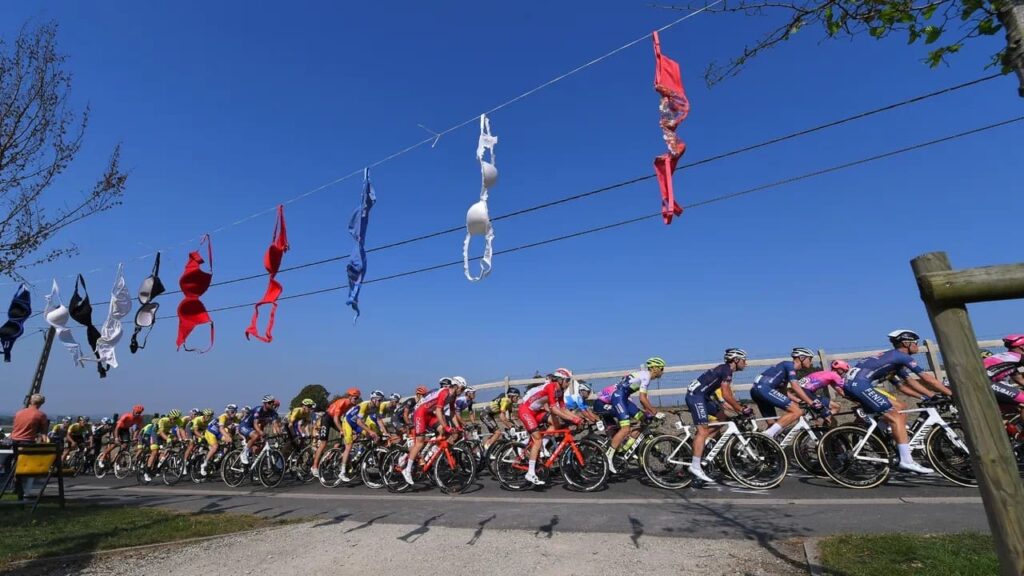
The Anatomy of a Pelotonic Rumor
The theory behind the padded bra trend seemed, on paper, to have some scientific merit. In aerodynamic terms, the human body is a disaster. It is a blunt, moving obstacle that creates massive pockets of low pressure and turbulent air. Proponents of the theory suggested that a strategically padded bra could fill the “dead air” space between a rider’s chin and chest when tucked into an aggressive time-trial position, acting as a fairing to guide air smoothly around the torso.
This wasn’t just idle gossip. The Union Cycliste Internationale (UCI)—cycling’s governing body, known for its strict and often regulatory rulebook—has long banned any clothing designed solely for the purpose of reducing drag. If a padded bra was indeed acting as an aerodynamic aid, it occupied a massive regulatory grey area. It left fans, commentators, and riders wondering: had someone cracked a new code for free speed?
Enter the Digital Wind Tunnel
To put an end to the speculation, the aerodynamic specialists at AiRO decided to put the theory to the ultimate test. Utilizing advanced Computational Fluid Dynamics (CFD) modeling—essentially a highly sophisticated digital wind tunnel—AiRO simulated the airflow over a female rider in a standard, aggressive time-trial position. They ran the numbers with two distinct profiles: one using a standard, unpadded sports bra, and another utilizing a heavily padded model designed to alter the chest silhouette.
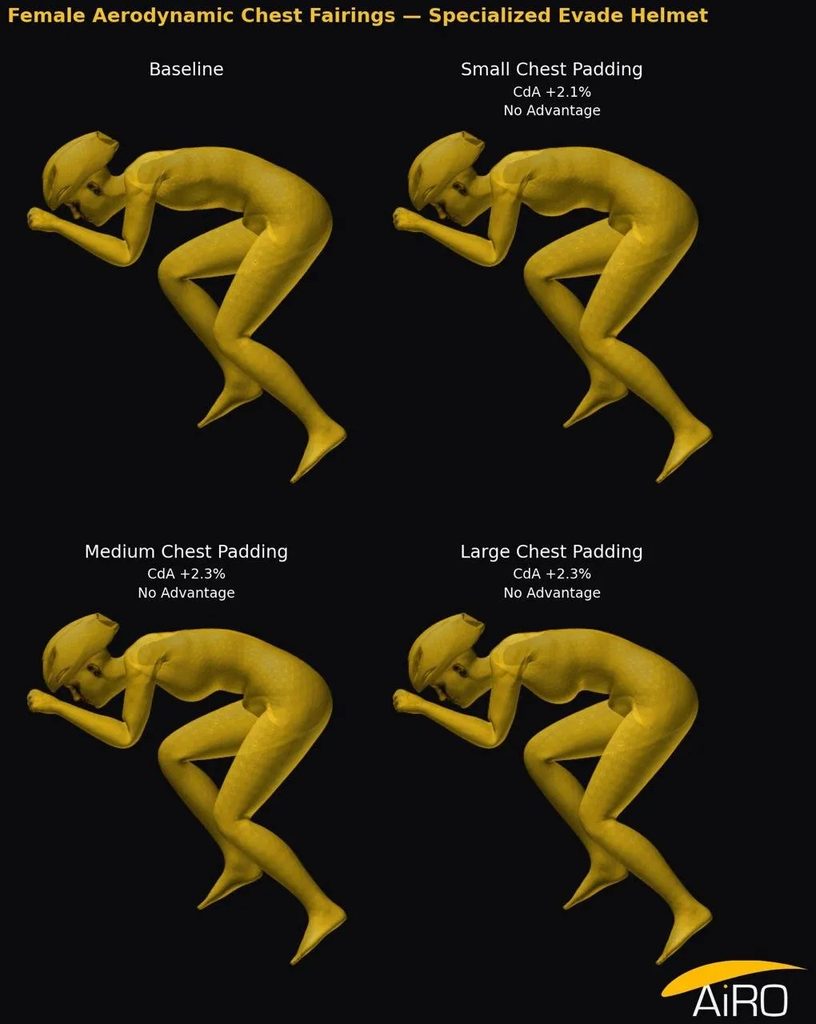
For those hoping for a revolutionary breakthrough, the results from AiRO’s modeling delivered a decidedly deflating answer. Padded bras do not make you faster. In fact, the simulation suggested they might do the exact opposite.
Why the Theory Deflated
The physics of cycling aerodynamics boil down to two main factors: frontal area (how much space you block) and shape (how cleanly air flows around you). While a padded bra does slightly alter the shape of the chest, AiRO’s CFD analysis revealed that any minor benefit in airflow smoothing was completely obliterated by the increase in frontal area.
“When you increase the physical size of the rider’s chest, you increase the total surface area pushing against the wind,” the analysis noted. “The aerodynamic penalty of a larger frontal silhouette far outweighs any hypothetical benefit of a smoother chest profile.”
In simpler terms, by trying to fill the pocket of turbulent air, you simply create a wider plow. The airflow over the rider’s head and shoulders still detaches and creates drag, but now there is more physical fabric and mass catching the wind. Instead of slicing through the air like a jet fighter, the padded profile acted more like a blunt instrument.
The Reality of Marginal Gains
The AiRO study serves as a reality check for a sport that occasionally gets lost in its own technological hype. While wind tunnels and CFD models are essential tools for elite performance, they also expose when a “hack” is simply a placebo. For female cyclists, the primary function of a sports bra remains comfort, high-impact support, and thermoregulation—none of which should be compromised in the pursuit of dubious aerodynamic shortcuts.
In the end, the Tour de France Femmes peloton can breathe a collective sigh of relief. Speed on the bike still comes down to the fundamental truths of the sport: relentless training, tactical brilliance, and a high power-to-weight ratio. The search for the next secret weapon continues, but for now, riders can leave the extra padding behind.
Optimize Your Training & Nutrition
Explore our interactive tools designed to fine-tune your performance and track your progress.
 Adam Hawk