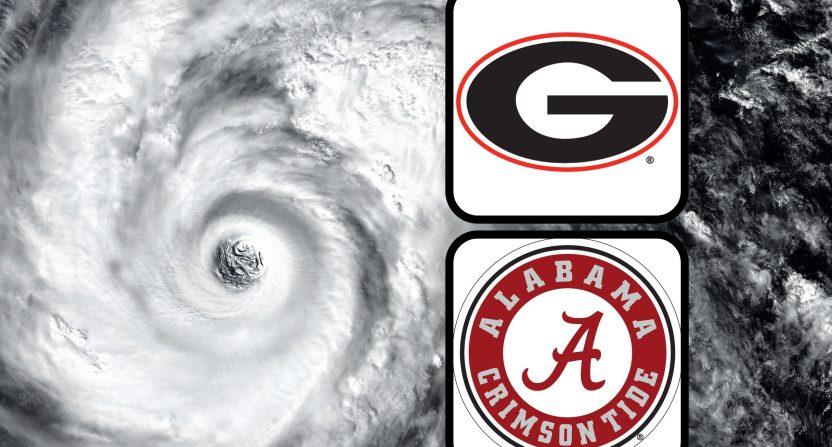
The Storm Cloud Over Tuscaloosa
The marquee matchup of the college football season—a heavyweight clash between No. 2 Georgia and No. 6 Alabama—is currently facing an opponent far more formidable than any defensive coordinator’s scheme. With a tropical system brewing in the Gulf of Mexico, the highly anticipated showdown in Tuscaloosa is under threat, as meteorologists warn that extreme weather could force the game to be moved, delayed, or drastically altered.
James Spann, the legendary chief meteorologist for ABC 33/40 and a trusted voice in Alabama, offered a sobering assessment of the situation in remarks to Michael Casagrande of AL.com. While the path of the potential hurricane remains fluid, the prospect of the storm making landfall near the game’s scheduled window has cast a pall of uncertainty over Bryant-Denny Stadium.
When Nature Challenges the Gridiron
For college football fans, this is the nightmare scenario. We spend the offseason dissecting rosters, analyzing transfer portal acquisitions, and circling this specific Saturday on our calendars. Georgia versus Alabama is a collision of dynasties, a game that shapes playoff resumes and defines coaching legacies. To have it jeopardized by meteorological volatility is a cruel reminder that even the most well-oiled athletic machine is subject to the whims of the atmosphere.
“The models are showing a significant level of uncertainty, but the potential for heavy rain, high winds, and dangerous conditions is enough to trigger contingency planning,” said industry experts monitoring the storm’s trajectory.
In the SEC, games are rarely moved unless public safety is at absolute risk. Stadiums are built to withstand high winds, and players are accustomed to playing through the typical Southeastern autumn squalls. However, a tropical cyclone is an entirely different caliber of threat. It brings the potential for localized flooding, dangerous debris, and power infrastructure failures that reach well beyond the stadium walls.
The Logistical Domino Effect
If officials determine that the game cannot safely proceed in Tuscaloosa, the administrative headache would be massive. Moving a game of this magnitude is not as simple as flipping a switch. Consider the factors at play:
- Broadcasting Rights: This game is the crown jewel of the ABC/ESPN Saturday night lineup. A schedule shift would force a ripple effect across the entire national broadcasting slate.
- Logistics and Fan Safety: Tens of thousands of fans descending upon Tuscaloosa represent a major evacuation challenge if the storm intensifies. Keeping crowds on the road during a weather event is a public safety risk that universities are loath to take.
- Student-Athlete Welfare: Beyond the game itself, the safety of the players, staff, and supporting personnel during travel is the primary legal and ethical priority for the athletic departments.
What Comes Next
For now, the waiting game continues. Coaches Kirby Smart and Kalen DeBoer are undoubtedly prepping their teams as if kickoff will happen at the scheduled time, but behind the scenes, conference officials are likely locked in constant communication with local emergency management and the National Weather Service.
Sports fans are often guilty of viewing these games in a vacuum, ignoring the reality of the world outside the lines. Yet, this potential disruption serves as a sharp reminder that the pageantry of college football relies on an infrastructure that, like everything else, is vulnerable to the elements. Whether the game stays in Tuscaloosa or undergoes a last-minute migration, one thing is certain: the conversation in the locker rooms has shifted from film study to survival prep.
Stay tuned to local weather advisories and official announcements from the SEC office. In a season defined by parity and high-stakes drama, we may be about to witness the most unpredictable variable of them all: Mother Nature.
Optimize Your Training & Nutrition
Explore our interactive tools designed to fine-tune your performance and track your progress.
 Adam Hawk