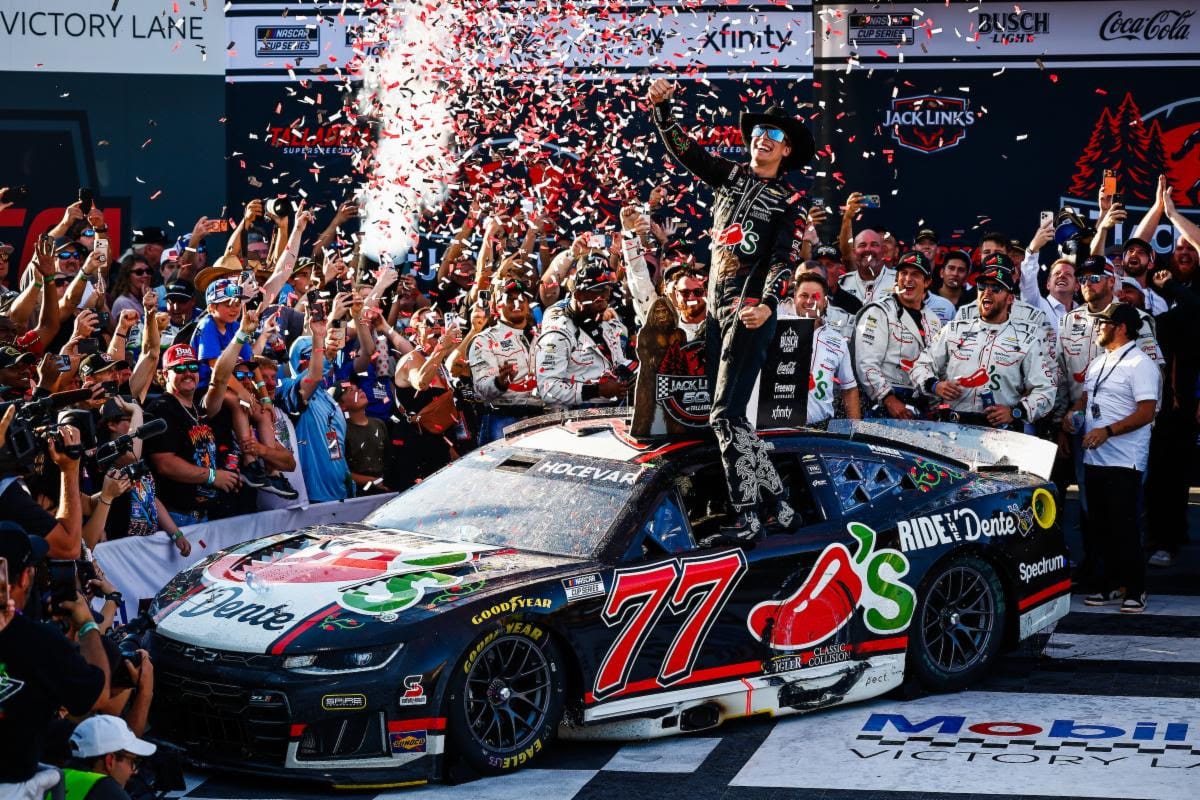
Every generation of NASCAR racing eventually develops a villain. It’s a role that requires a specific cocktail of unfiltered aggression, a lack of deference for the veteran hierarchy, and the uncanny ability to remain unbothered while the rest of the garage stews in frustration. For years, that title belonged to drivers like Kyle Busch or Joey Logano. But in the current Cup Series landscape, a new name has ascended to the top of the “most wanted” list: Carson Hocevar.
At just 21 years old, Hocevar has transitioned from a promising prospect to the driver everyone is currently keeping an eye on—though rarely for the right reasons. His aggressive driving style, combined with a perceived lack of remorse after incidents, has turned him into the garage’s public enemy No. 1. In a sport where the “code” of conduct is often unwritten and enforced through contact, Hocevar is operating as if he hasn’t read the manual—or worse, as if he’s intentionally burning it.
A Reputation Built on Contact
The friction isn’t coming from thin air. It is the direct result of a string of on-track altercations that have left veteran drivers venting their frustrations to the media and the league office. Hocevar’s style is best described as “high-risk, zero-chill.” He drives with a level of urgency that often disregards the safety or the race trajectory of those around him, leading to a series of spins and crashes that have cost more established names their shot at a finish.
“He’s got a lot of talent, but he’s got a lot to learn about the way this business works,” one veteran driver noted recently, requesting anonymity to avoid further heating up the rivalry. “The problem isn’t the racing; it’s the lack of accountability afterward. When you drive through people, you usually offer a handshake or a conversation. Carson acts like it’s just another Tuesday.”
This refusal to play the political game is what truly grates on the veterans. In NASCAR, respect is a currency earned through years of side-by-side racing. By ignoring the traditional “pay it forward” mentality of the Cup Series, Hocevar has made himself an island. And in the world of stock car racing, being an island is dangerous.
The “That Guy” Effect
What makes the Hocevar situation particularly compelling is that he seems entirely unfazed by the growing list of rivals. History shows that NASCAR drivers who embrace the role of the antagonist—the “bad boy”—often find their performance amplified by the scrutiny. For Hocevar, the antagonism seems less like a calculated persona and more like a competitive baseline. He is “that guy” because he refuses to soften his edges to appease the establishment.
However, there is a fine line between being a fierce competitor and being a liability. NASCAR officials generally tolerate aggressive driving—it is, after all, a contact sport—but they draw a hard line when actions cross into the realm of intentional recklessness. As the season progresses, Hocevar faces a critical junction:
- The Pivot: He can begin to curb his aggression, build alliances, and transition into a respected, albeit aggressive, racer.
- The Doubling Down: He can lean into the villain narrative, effectively forcing other drivers to race him with increased hostility—a path that usually ends in more frequent wrecks and fewer checkered flags.
Why It Matters for NASCAR
Love him or loathe him, Hocevar is exactly what a sport in need of personality shifts often gets. The growing friction surrounding his driving creates immediate narrative stakes. Fans who might otherwise be bored during a long Sunday afternoon are suddenly tuned in to see if Hocevar ends up in a mid-race scrap or a post-race confrontation.
The veteran guard is clearly fed up, and the threat of “retaliation”—the age-old NASCAR method of settling scores on the track—looms over every lap Hocevar turns. Will the garage eventually humble him, or is Hocevar ushering in a new era where the old rules of respect no longer apply? For now, the only certainty is that whenever Hocevar is on the track, the tension in the air is palpable. And in the high-stakes world of NASCAR, that is the most valuable commodity of all.
Optimize Your Training & Nutrition
Explore our interactive tools designed to fine-tune your performance and track your progress.
 Adam Hawk