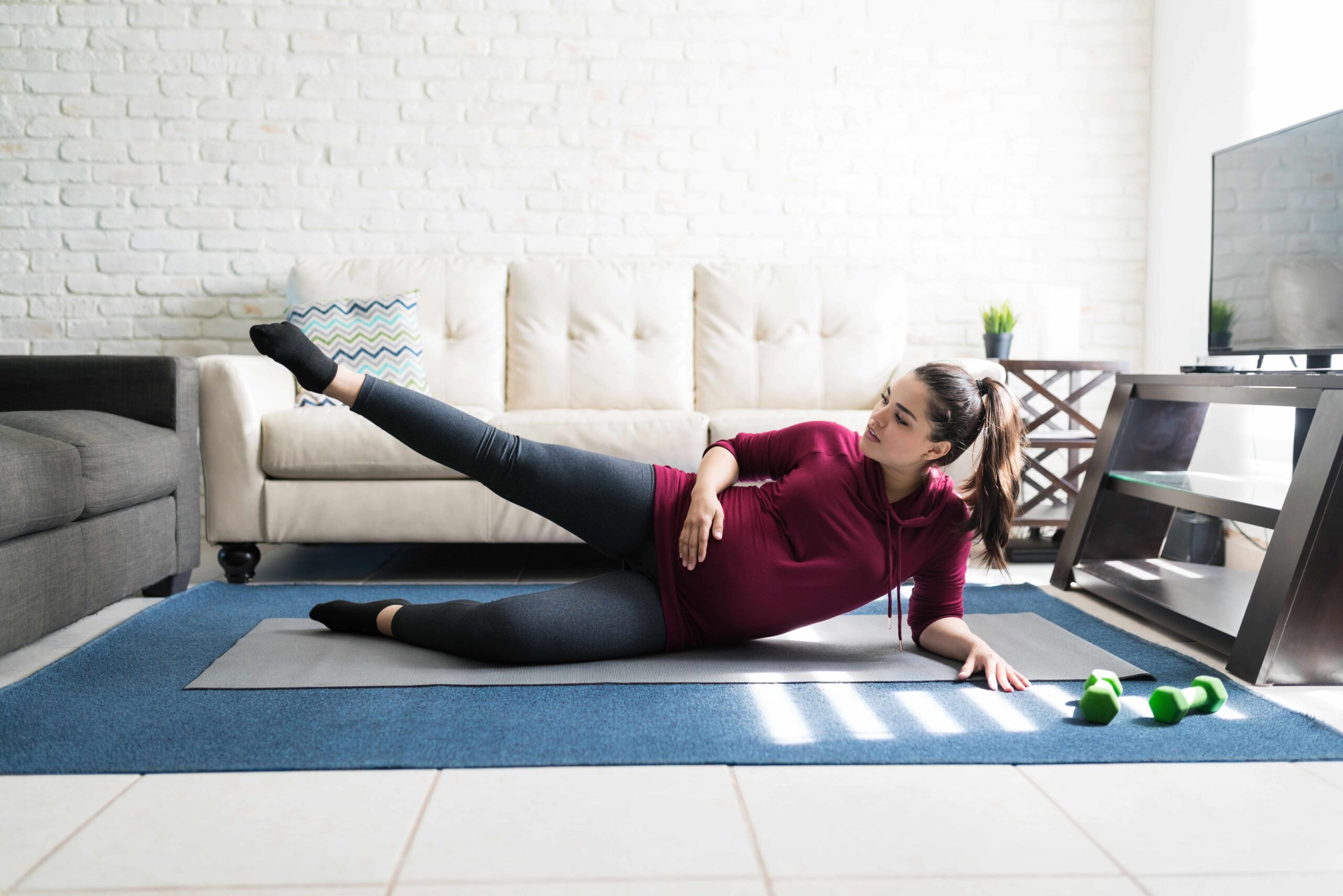
Staying active during pregnancy is one of the best things you can do for both maternal health and the baby’s development. Gone are the days when pregnancy was treated as a condition requiring months of bed rest. Modern medical consensus from major health organizations—such as the American College of Obstetricians and Gynecologists (ACOG)—strongly encourages regular physical activity for individuals with uncomplicated pregnancies.
Exercising while pregnant helps manage gestational weight gain, reduces the risk of gestational diabetes and preeclampsia, eases lower back and pelvic pain, supports mental well-being, and builds the physical endurance required for labor and postpartum recovery.
However, because your body undergoes profound anatomical, hormonal, and cardiovascular shifts, training during pregnancy requires thoughtful adjustments. Here is how to approach working out safely and effectively across all three trimesters.
1. Key Physiological Changes to Keep in Mind
Before stepping into a workout, it is essential to understand how pregnancy alters your biomechanics and internal systems:
- The Hormone Relaxin: Throughout pregnancy, your body releases the hormone relaxin, which loosens ligaments and joints (especially in the pelvis) to prepare for birth. While essential for delivery, it increases joint laxity and the risk of sprains or overstretching. Avoid aggressive, ballistic stretching or extreme ranges of motion under heavy load.
- Shifting Center of Gravity: As the baby grows, your center of gravity shifts forward. This accentuates the lumbar curve of your lower back, increases lordosis, and alters your balance. Stability exercises and movements with a wide base of support become increasingly important.
- Increased Blood Volume and Heart Rate: Blood volume increases by 40% to 50% during pregnancy, and resting heart rate naturally elevates. Because your cardiovascular system is already working harder, you will reach higher exertion levels much faster than usual.
- Core and Pelvic Floor Pressure: The growing uterus exerts continuous downward pressure on the pelvic floor muscles and stretches the abdominal wall (the rectus abdominis), making it crucial to manage intra-abdominal pressure properly to minimize diastasis recti (abdominal separation).
2. General Training Guidelines and the “Talk Test”
For most healthy individuals, the standard baseline recommendation is at least 150 minutes of moderate-intensity aerobic and strength activity per week, ideally spread across 3 to 5 days in 20- to 30-minute sessions.
Gauging Intensity: The Talk Test
Heart rate zones are often unreliable during pregnancy due to baseline cardiovascular fluctuations. The most practical way to monitor intensity is the Talk Test:
- You should be working hard enough that you are sweating and breathing faster, but you should still be able to carry on a full conversation without gasping for breath.
- If you can only speak in broken, single-word phrases, your intensity is too high—scale back the pace or weight.
3. Best Types of Exercise During Pregnancy
A. Strength Training
Resistance training preserves muscle mass, stabilizes lax joints, and strengthens the postural muscles needed to counteract a forward-shifting belly.
- Focus Areas: Glutes, hamstrings, upper back, and shoulders. Strengthening the posterior chain directly combats lower back aches and prepares you for carrying a newborn.
- Movement Choices: Squats, goblet squats, lunges, Romanian deadlifts, seated cable rows, lat pulldowns, incline dumbbell presses, and standing resistance band exercises.
- Repetition Range: Moderate weights in the 10 to 15 repetition range, focusing on smooth tempo, stability, and controlled breathing rather than maximal 1-rep lifts.
B. Low-Impact Cardiovascular Exercise
Cardio supports heart health, manages blood sugar levels, and maintains stamina.
- Brisk Walking: The most accessible, low-impact exercise available. It requires no equipment and places minimal jarring stress on the joints.
- Stationary Cycling: A great cardiovascular workout that eliminates the risk of falling or balance issues associated with outdoor cycling.
- Swimming and Water Aerobics: The buoyancy of the water relieves gravitational stress on the spine and pelvis, reduces joint swelling, and prevents overheating.
- Incline Walking on a Treadmill: Excellent for cardiovascular conditioning and glute activation without the high-impact stress of running.
C. Pelvic Floor and Deep Core Work
Rather than traditional abdominal exercises, focus on deep core integration:
- Diaphragmatic Breathing: Inhaling to allow the belly, ribs, and pelvic floor to gently expand; exhaling while naturally drawing the pelvic floor and transverse abdominis up and in.
- Bird-Dogs and Pallof Presses: Resist rotational forces and train core stability without crunching the spine.
- Kegel / Pelvic Floor Training: Learning both how to contract and fully relax the pelvic floor muscles is vital for labor.
4. Trimester-by-Trimester Adjustments
First Trimester (Weeks 1 to 12)
- What to Expect: Fatigue, nausea, and morning sickness are common.
- Training Focus: If you already had an established fitness routine before pregnancy, you can generally maintain most of your usual activities with minor intensity adjustments. Listen closely to your body; if exhaustion hits, swap a high-intensity session for gentle walking or mobility work.
- Key Rule: Stay well-hydrated and avoid exercising in hot, humid environments, as the baby cannot regulate its own temperature during early embryonic development.
Second Trimester (Weeks 13 to 27)
- What to Expect: Energy levels often rebound, but your belly begins to expand visibly, shifting your balance.
- Training Focus:
- Avoid prolonged exercises performed flat on your back (supine position) after week 16–20. The weight of the uterus can compress the inferior vena cava, reducing blood return to the heart and making you feel dizzy or lightheaded. Switch to incline bench angles or side-lying positions.
- Stop performing traditional forward crunches, sit-ups, and front planks to avoid excessive intra-abdominal pressure that worsens diastasis recti. Look out for “doming” or “coning” along the midline of your abdomen during movements—if it occurs, regress the exercise.
Third Trimester (Weeks 28 to 40)
- What to Expect: Increased physical weight, pelvic pressure, joint laxity, and shortness of breath.
- Training Focus: Prioritize comfort, pelvic stability, and mobility.
- Transition more movements to supported positions (e.g., seated dumbbell presses, box squats).
- Use a wider stance during squats and lunges to accommodate your belly and maintain balance.
- Emphasize pelvic opening exercises, hip mobility, and gentle walking.
5. Movements and Activities to Avoid
To ensure safety, eliminate the following from your training program:
- Contact Sports and Collision Risks: Soccer, basketball, ice hockey, and martial arts due to the danger of abdominal trauma.
- High Fall-Risk Activities: Downhill skiing, horseback riding, outdoor road cycling, gymnastics, or bouldering.
- Hot Environments: Hot yoga, hot Pilates, or training in high heat and humidity, which can cause maternal hyperthermia.
- The Valsalva Maneuver: Holding your breath while bearing down against heavy resistance. Always exhale on the exertion (the lifting phase) and inhale on the reset to prevent sudden spikes in blood pressure and pelvic floor strain.
- Scuba Diving: The fetal pulmonary circulation cannot filter out decompression gas bubbles.
6. Warning Signs to Stop Exercising Immediately
Always obtain clearance from your obstetrician or midwife before beginning or continuing an exercise routine during pregnancy.
Stop your workout and contact your healthcare provider immediately if you experience any of the following symptoms:
- Vaginal bleeding or fluid leakage
- Dizziness, lightheadedness, or feeling faint
- Shortness of breath before starting exertion
- Chest pain, rapid heart palpitations, or severe headaches
- Painful, regular uterine contractions
- Calf pain or swelling (which can indicate a blood clot)
- Muscle weakness affecting balance or severe pelvic/pubic bone pain
Summary Checklist for Pregnant Exercisers
- [ ] Get clearance from your healthcare provider.
- [ ] Aim for 150 minutes of moderate activity per week.
- [ ] Use the Talk Test to ensure you stay at a safe intensity.
- [ ] Focus on strength training, low-impact cardio, and deep core stability.
- [ ] Avoid flat-on-your-back exercises after the first trimester.
- [ ] Never hold your breath—exhale on effort.
- [ ] Stay hydrated, train in a cool environment, and prioritize rest whenever your body asks for it.
 Adam Hawk