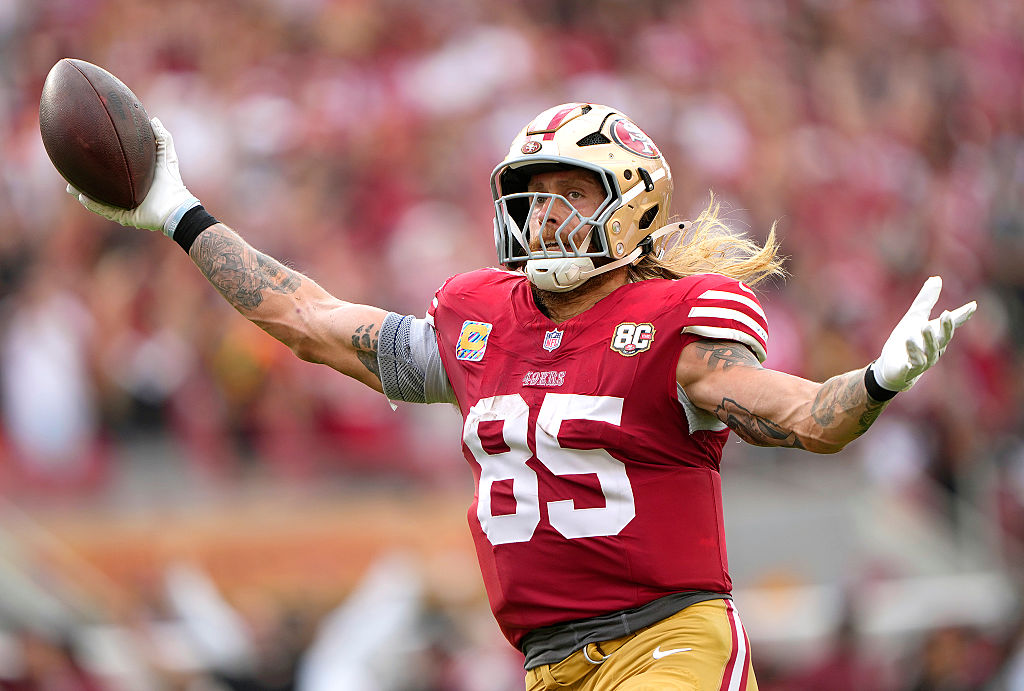
George Kittle has never been one to sit quietly in the locker room. Whether he’s flattening a linebacker in the flat or hyping up the Levi’s Stadium crowd, the San Francisco 49ers tight end operates with a level of intensity that often blurs the line between player and personnel executive. That boundary shifted again this week when 49ers general manager John Lynch revealed that Kittle had approached the front office with a singular, pointed question ahead of the 2026 NFL trade deadline: Are we going after Khalil Mack?
It is a rare glimpse behind the curtain of an NFL front office. Players usually stick to the business of blocking and tackling, leaving the complex web of salary caps, draft capital, and trade negotiations to the GMs. But for Kittle, the move wasn’t just about adding talent; it was an acknowledgment of the shrinking window for the 49ers’ current championship-caliber roster.
The Mack Factor
For those who follow the defensive side of the ball, the intrigue surrounding Khalil Mack is obvious. Even as he navigates the later stages of a storied career, the veteran edge rusher remains a disruptive force. His ability to collapse a pocket—not just through pure speed, but through a tactical understanding of offensive line protections—is exactly the kind of “closer” energy that playoff-bound teams covet.
Kittle’s inquiry highlights a classic locker room sentiment: players know who they need to win a ring. While analysts look at depth charts and spreadsheets, players look at the guys standing across from them in practice. Kittle sees the 49ers’ offense firing on all cylinders, but he is savvy enough to realize that in the NFC, one elite pass-rusher can be the difference between a conference title and an early vacation.
The Pressure of the Deadline
The NFL trade deadline is often characterized by cautious, incremental moves. General managers are notoriously risk-averse, fearing the optics of trading away future draft picks for a veteran who might only be a rental. However, Kittle’s proactive stance represents a modern evolution in player empowerment.
When a leader of Kittle’s stature makes a request, it changes the conversation in the front office. It signals to Lynch and the rest of the 49ers organization that the team is ready for an “all-in” push. It serves as both a nudge to management and a vote of confidence in the core group that has fought through deep playoff runs over the last several seasons.
What This Means for the 49ers
Should the 49ers actually pursue a deal for a player of Mack’s caliber, they would be betting on the “now.” The move would involve:
- Short-term defensive dominance: Pairing a veteran technician like Mack with the 49ers’ existing front-seven rotation would create nightmare scenarios for opposing quarterbacks in high-leverage situations.
- Locker room cohesion: If the players know the organization is listening to their input, it can create a powerful “us against the world” mentality.
- Financial gymnastics: Acquiring a star like Mack is rarely simple. It would likely require restructuring existing contracts and potentially clearing cap space elsewhere, a challenge the 49ers’ front office has faced repeatedly in recent years.
Ultimately, George Kittle’s outreach to the front office is more than just a rumor or a headline. It’s an indicator of a hungry team that feels it is only a single piece away from the mountaintop. Whether the 49ers pull the trigger on a deal for a star like Mack or choose to stand pat, one thing is clear: in San Francisco, the pursuit of a Super Bowl is a team-wide collaboration. And for Kittle, the job is to make sure every stone—and every trade opportunity—is turned over before the deadline passes.
Optimize Your Training & Nutrition
Explore our interactive tools designed to fine-tune your performance and track your progress.
 Adam Hawk